
From the Archive:

‘Only in the Lord’
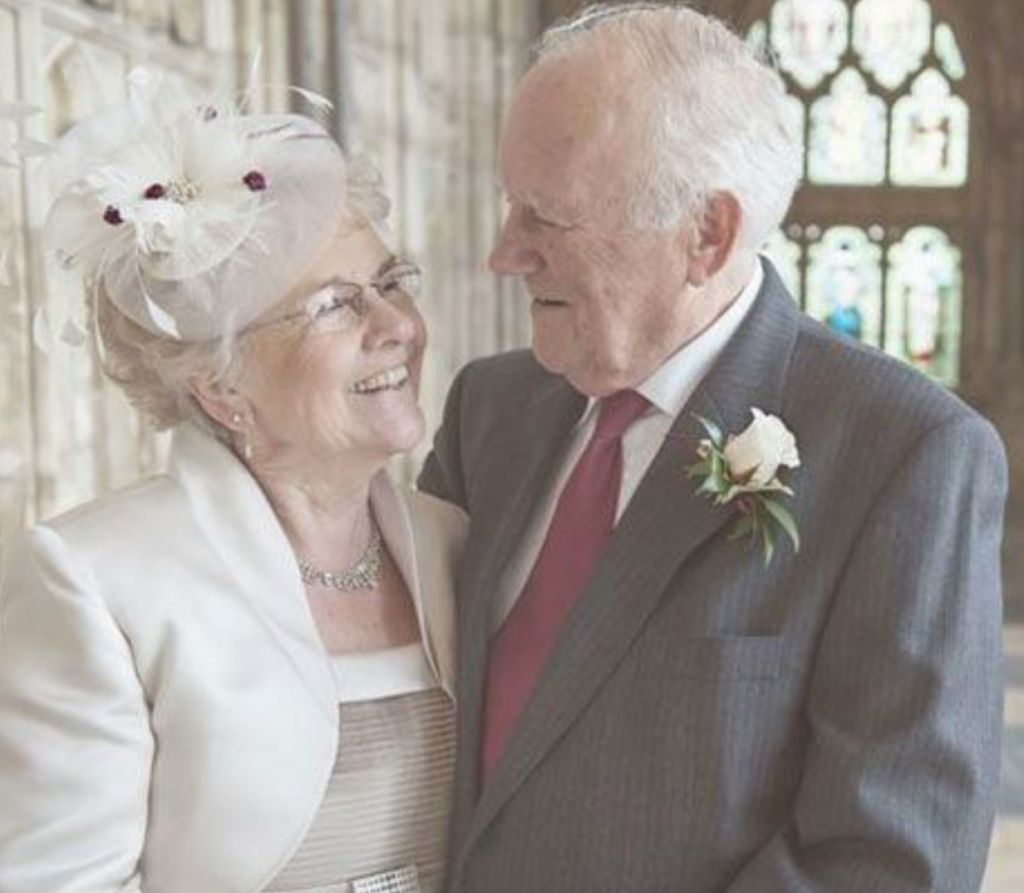
I recently received a question from one of our readers regarding the application of the apostle Paul’s instructions about marriage options for widows, specifically asking if the same should be expected of widowers. Paul writes, “A wife is bound by law as long as her husband lives, but if her husband dies, she is at liberty to marry whom she will, only in the Lord” (1 Cor. 7:39). Paul then gives his personal judgment that she would be happier if she were to remain unmarried (v.40).
The key to understanding what is expected of a widow who wants to marry is to figure out what is meant in this passage by the phrase “only in the Lord.” In order to determine what the word “only” indicates, we must first determine what the phrase “in the Lord” means in this passage. This is not easy since the phrase is used more than 100 times in the New Testament but does not always have the same meaning. The translators of the New International Version (NIV) tried to settle the issue for us by wording it “but he must belong to the Lord,” and the New English Translation (NET) followed suit with “only someone in the Lord.” However, those are interpretations rather than translations.
There are three differing interpretations among Bible believers as to what is expected of a widow who wants to marry:
- The phrase “in the Lord” is equivalent to “in Christ.” So if she wishes to marry, she must choose a man who is a Christian.
- The phrase “in the Lord” means “in accord with the Lord’s will,” so she is free to marry whom she wishes as long as both he and she have a right to marry.
- This instruction is limited to “the present distress” and is no longer applicable.
I will not try to keep you in suspense as to my conclusion—I believe Paul is answering some specific questions that he received in a letter from the Corinthian brethren (7:1). His answers included instructing a widow who wants to marry to do so only if the one she wishes to marry is a Christian. If my conclusion is correct, I see no reason why he would have answered differently if the question had been asked about a widower. Let me comment on the other proposed interpretations.
A common argument for “only in the Lord” meaning in accord with God’s will is an appeal to similar wording in other of Paul’s writings, especially his instruction to children to “obey their parents in the Lord” (Eph. 6:1). The most common interpretation is that he was telling children to obey their parents as long as what is demanded is in accord with God’s will. However, consider that Paul was writing to Christians in Ephesus where the letter was most likely read in their assemblies where children could be admonished to obey their parents who, as Christians, could be trusted to command what was right.
Another example of similar wording is Paul’s admonition to wives to “submit to your husbands, as is fitting in the Lord” (Col. 3:18). This might be telling wives that obeying their husbands is “fitting” for one who is in Christ.
I readily admit that children should obey their parents and wives should obey their husbands only so long as what is required is according to God’s will. This could be what Paul meant, but it is not the only possible conclusion. There are many examples of the phrase “in the Lord” clearly referring to those “in Christ.” In this very context Paul writes, “For he who is called in the Lord while a slave is the Lord’s freedman.” In the last chapter of Romans, Paul uses phrases “in the Lord” and “in Christ” interchangeably. Note the following: “Greet Priscilla and Aquila, my fellow workers In Christ Jesus” (16:3); “Greet Andronicus and Junia…who were in Christ before me” (v.7); “Greet Amplias, my beloved in the Lord” (v.8); “Greet Urbanus, our fellow worker in Christ” (v.9); “Greet Appelles, approved in the Lord...” There are more—check out verses 11, 12 and 13.
The “present distress” was Paul’s reason for advising Christians to “remain as he is” (1 Cor. 7:25ff). It may be that Paul’s “judgment” stated in verse 40 is due to the distress at that time, but it does not necessarily follow that “only in the Lord” was specified for that reason.
It is my conviction that any faithful Christian (whether a widow, widower, or otherwise single) would want to marry a Christian, and this is consistent with God’s expectation throughout all generations. The Old Testament, though not a law for us, is our “tutor” (Gal. 3:24), and God’s attitude toward His people marrying outside of His people is evident. The apostle Paul was a single man (by choice), but he made it clear that he had the “right to lead about a believing wife” (1 Cor. 9:5). It is significant to me that the Holy Spirit included the word “believing” regarding Paul’s right.
The marriage relationship is the most intimate relationship between two people. The wife is a man’s suitable “helper” (Gen. 2:15) in ways more than just physically. The Christian should choose someone who will “help” him/her go to heaven. The unbeliever is headed in a different direction than the faithful Christian is. Even if you disagree with my conclusion, I would hope that we could all agree that godly wisdom should motivate a Christian to choose a mate with the same goal—eternal life. So I leave you with the admonition of the apostle Paul: “See then that you walk circumspectly, not as fools but as wise, redeeming the time, because the days are evil” (Eph. 5:15-16).
When Prayer for One Another Doesn’t Happen
We know the Scriptures that say that we are to “pray continually” (1 Thess. 5:17 NIV). We believe in the power of prayer, that “…the prayer of a righteous person is powerful and effective” (Jas. 5:16 NIV). We find consolation in knowing that “…the eyes of the Lord are on the righteous, and his ears are open to their prayers…” (1 Pet. 3:12). So why don’t we pray more? Particularly, why don’t we pray more for one another?
To steal a line from Captain Renault in the movie Casablanca, we know to “round up the usual suspects” when we look for reasons we don’t pray more: we’re busy, tired, distracted, overwhelmed, sick, worried, anxious, sinful… We’ve heard lessons on these, and we know that prayer is actually the unused antidote for all of these and more (Phil. 4:6). The above reasons also affect our praying for one another, but it gets more complicated. Prayer for one another is impacted by knowing and caring about one another’s lives and needs.
Knowing One Another
First century fellowship among Christians was deep and intimate. They “…were of one heart and of one soul… they had all things in common” (Ac. 4:32, also Ac. 2:44). What happened to one body part was shared by the whole. “And if one member suffers, all the members suffer with it; or if one member is honored, all the members rejoice with it” (1 Cor. 12:26). Fellowship is to take us into the struggles and triumphs of daily living. Knowing what to pray for requires knowing one another.
Knowing requires telling.
“Confess your trespasses to one another and pray for one another…” (Jas. 5:16). How many of us could benefit from the prayers of others, but we don’t tell anyone? How many of us need the prayers of healing mentioned in James 5:13-16, but we don’t call the elders? The Psalmist wrote: “When I kept silent, my bones wasted away through my groaning all day long” (Psa. 32:3 ESV). Why do we do this? We are suffering physically, emotionally, or spiritually, but we don’t tell anyone. What could possibly be overpowering our faith in the power of prayer? Consider these:
Pride
We don’t want people to think less of us, to think we are weak or needy or complaining, so we don’t say anything. We know prayer helps, but our pride keeps other people from knowing and therefore praying for us. Pride can kill prayer.
Fear
We fear people will talk behind our backs. We fear others will think it is too small or too big of a thing to pray about. We sometimes wait until there is more clarity or certainty to ask for prayers when it is the murky, uncertain times for which prayer is most designed. Fear can kill prayer.
Feelings and Personality
Sometimes we just don’t feel like talking about a problem. It may be tied up in personality or culture, but we may just not be the kind of people who talk about our problems. True faith in prayer pushes us to act outside of who we are and what we feel. Feelings and personality can kill prayer.
Helping Ourselves
We are sometimes silenced by the idea that we need to help ourselves as much as possible before we ask others to pray about it. Brothers and sisters may be shocked to learn of our desperate situations, situations that might have been avoided had we gotten others and prayer involved. Prayer should be a first resort, not a last resort. Although we do participate in some solutions, strong self-sufficiency and self-reliance concepts can kill prayer.
The fact is, prayer for one another often doesn’t happen because we simply do not know about one another’s needs—and we don’t know the needs of one another because we allow carnal thinking and faithlessness to keep us from asking for prayers.
Not Approachable
Individuals and congregations can certainly do a lot to be more open and approachable. This is part of the love that Jesus says marks us as His disciples (Jn. 13:35). We must not ask people to tell us their needs, then react poorly or not at all (Jas. 2:16) when they do and expect them to continue to do it. However, people of true faith will not be deterred by unapproachable people. They will seek out and find caring, loving, praying people and ask for prayers.
So maybe our struggles with prayer aren’t just the usual of being busy, tired, and distracted. Maybe pride, fear, feelings, personality, or self-sufficiency have hijacked our willingness to be open and even vulnerable with one another. And that is robbing us of the prayers of the righteous that we know are “powerful and effective” (Jas. 5:16 NIV).
Just What Does it Take to Motivate Us?

When I was working with the church in Davenport, Iowa, several years ago (before we were able to build our own building), we met in an old one-room schoolhouse. This arrangement seemed unique to a local television station, so it contacted us about coming to one of our assemblies and taping the service for a feature segment on their newscast.
We were happy to receive any publicity we could get, so we gave permission for people from the station to come to a Sunday morning worship. The day arrived and, for the first time, every man, woman and child in the congregation was there. Funny, isn’t it, how the possibility of being on television inspires people?
As we were about to begin our worship, the lights from the cameras were turned on and produced a surge that blew the one electrical fuse in the building. The news crew gathered up their equipment and discreetly left without any footage whatsoever.
This got me to thinking about what motivates people to attend worship and reminded me of a story I read that took place in a simpler time when Herbert Hoover was President of the United States.
President Hoover was traveling from Gettysburg, Pennsylvania, after attending an event at which he had given a speech. Accompanying him were his wife and one cabinet member. As they traveled by car on the following Sunday morning, they came to a little church building by the side of the road. Noting that it was time for worship, they decided to stop and attend the service.
Only thirteen people attended the service that morning. Those who did attend and the man in the pulpit were happily surprised when the President of the United States came in and sat down with them in worship. They were further pleased by his generous contribution when the offering was taken. Before nightfall, the whole community had heard of the honored guest at the little church, and many regretted not being there.
I wonder how many of us would miss services if we knew that a President of the United States would be in attendance? If only Christians would realize that One much greater than the President is present every time the saints meet, maybe they would make more effort to be there.

White Supremacy is a Poison
In the wake of the May 14th racially-motivated shooting in Buffalo, New York, President Biden observed that, “White supremacy is a poison.” Amen! I don’t often agree with the rhetoric of politicians, and while I strongly suspect that the antidotes to this poison which they might propose will be woefully inadequate and misguided, I can affirm this simple statement: white supremacy is a poison! It is a poison as potent and deadly as any godless and warped doctrine of men. It is a poison of the mind which poisons the well of humanity..
To be clear, I am defining “white supremacy” as “the belief that white people are superior to those of other races and thus should dominate them.” The same article from which this definition is taken later observes that, “white supremacy has roots in the...doctrine of scientific racism.” In a link to another article, “Scientific racism, sometimes termed biological racism,” is defined as the “belief that empirical evidence exists to support or justify racism (racial discrimination), racial inferiority, or racial superiority. Historically, scientific racism received credence throughout the scientific community, but it is no longer considered scientific. ...Modern scientific consensus rejects this view as being irreconcilable with modern genetic research. ...Scientific racism was common during the period from the 1600s to the end of World War II” (Wikipedia, accessed 5/18/22).
White supremacy” is a relatively modern concept that seems to have found a foothold in the “science” of the “Enlightenment” and has prevailed for several centuries. Of course, the absurdity of “scientific racism” and the awful consequences of this kind of thinking were ultimately revealed in the extremes of Adolf Hitler and his nationalistic workers party (Nazis).
Yet, I would ask this question: if humans are the product of macro-evolution (which is the prevailing “scientific theory”), then on what basis can anyone oppose an evolution of the races and theories about racial superiority through survival of the fittest? The quote above says it is because “modern scientific consensus rejects this view as being irreconcilable with modern genetic research.” Ah! The reason the world rejects “white supremacy” is because of “scientific consensus” influenced by “genetic research.”
The earliest of Christians—long before the so-called Enlightenment—believed that it was from “one blood” that “every nation of men” came to “dwell on all the face of the earth” (Ac. 17:26). Of course, this view came from the allegedly “unscientific” belief that God “made the world and everything in it” (v24). When the so-called “age of enlightenment” came along and deconstructed faith through “science,” racism was just one of its natural fruits.
“White supremacy” is a poison because it springs from pride in self which is fueled by the self-deception of a “science” that prioritizes nature over nature’s Creator (cf. Rom. 1:20-25). Of course, racism is not the only fruit of this obsession with self versus others which plagues our world (e.g. sexual immorality, abortion, divorce, etc.); but, like other issues, racism will not be solved by human ordinances and Supreme Court decisions alone.
Yes, many professing Christians over the last several centuries bought into the lies of “science” because it validated their positions and privileges and racism. Thus, in their pride and selfishness, they likewise twisted the Scriptures to justify their imagined racial superiority. In so doing, they ignored the scriptural admonition, “Do not hold the faith of our Lord Jesus Christ, the Lord of glory, with partiality” (Jas. 2:1).
White supremacy, to again borrow from James, “is an unruly evil, full of deadly poison” wherein “we bless our God and Father [for our privilege], and with it we curse men who have been made in the similitude of God. Out of the same mouths proceed blessing and cursing. My brethren, these things ought not to be so!” (Jas. 3:8-10, emphasis mine).
So, while racist distortions of Scripture by some religious individuals and institutions have certainly given occasion for unbelievers to blaspheme God, the solution to racism is just as certainly not to abandon our Creator for “modern scientific consensus.” The solution is also not found in the promises or platforms of any political party. The antidote to the poison of “white supremacy” (or any other self-exaltation) is to acknowledge our Creator and to repent and humble ourselves before Him.
Let’s keep this perspective as the rhetoric of another political season heats up. Watch your tongue! Let those who identify with Christ rise above the fray, looking unto Jesus and remembering that the weapons of our warfare are not carnal, but they are mighty!
Extraordinary Love
God loves everyone (Jn. 3:16). We are to love as God loves (Jn. 15:12). It is a trademark of Christ’s followers (Jn. 13:35). Love “keeps no record of wrongs” (1 Cor. 13:5 niv). “Love does not delight in evil” (1 Cor. 13:6). “Love will cover a multitude of sins.” (1 Pet. 4:8)
Now apply this to literally everyone (Matt. 5:44). Apply it to church and government leaders who have made mistakes during the pandemic. Apply it to political leaders you fervently disagree with. Apply it to people who are criminals.
The world keeps its lists of wrongs and humiliates people with their sins. The world rejoices when bad things happen to those it dislikes. We are tempted to join the world. Instead, join God in expressing extraordinary love.
Sing Out, You Joyful Christians!
How rewarding it is to hear Christians singing songs in praise to God and words of admonition and encouragement to one another! Conversely, how discouraging it is to witness some Christians barely opening their mouths while a congregation is being led in worship.
Speaking to one another in psalms, hymns, and spiritual songs is not merely a suggestion—it’s a command connected with being filled with the Spirit (Eph. 5:18-19). It is also a means of teaching and admonishing one another (Col. 3:16).
With this in mind, perhaps there should be more emphasis in our preaching and teaching about the benefits and obligations of worship in song. Singing is a responsibility and a reflection of the grace in our hearts to the Lord. Not all of us have natural musical talent, but this doesn’t mean that we should excuse ourselves from this important means of worship or feel inhibited from “singing out” praise to God “in the midst of the congregation” (Heb. 2:12).
I’ve noticed that many young children in assemblies of the saints are not joining in as we worship in song. This causes me to wonder if any time is being spent praising God in song in their homes.
Some of my best memories of childhood are of what my family called “the lesson” when we would read from the Bible, sing, and pray. And some of my favorite memories as a parent are of long road trips when one or more of my children would break out in song or ask that we sing as we drove.
My children are all grown up now with grown children and grandchildren of their own, but when we get together during holidays and at other occasions, there is always a time set aside for singing to the Lord. The children are not off playing while the adults sing but are willingly joining in. Sometimes we sing long enough that some of the younger ones fall asleep—to the praise of God.

Peace, Peace (Articles From the Days Gone By)
Each Christian is engaged in constant warfare. He fights against sin, against false doctrine, against every device of Satan. He fights for truth, for righteousness, and for the kingdom of Christ. The Christian fights with words, with deeds, and with the whole armor of God (Eph. 6:14-17). And he fights voluntarily, willingly, even gladly. Indeed, the Christian fights constantly—he fought yesterday, he fights today, and he will fight tomorrow.
But the true Christian does not fight wildly. He measures his blows for effectiveness. He does not fight for personal victory nor for worldly applause. And the Christian must not fight for selfish satisfaction. What a pity that churches are torn and divided because some of God’s people demanded satisfaction of their own desires! Frequently congregations that were growing and that were abiding in the strict doctrine of Christ are distressed and/or destroyed by carnally-minded disciples who manifest unyielding attitudes and unbending selfishness.
But why should Christians fight each other? Why, especially should they do so when they stand for the same principles and engage in the same activities? What excuse can be given for war among the members when there could be peace? What alibi can we give for division when there could be unity?
There surely will be great reward for the soldier of Christ who has faithfully fought against Satan. Conversely, there will be certain shame and dismay—and punishment—for the Christian who has enrolled in Satan’s army and fights against his brother without a cause or in an unjust, undeserving, unscriptural cause.
Brethren, let there be peace among us! It is so necessary, and when we possess the mind of Christ it is so completely possible (Jn.17:21; 1 Cor. 1:10). Let each Christian gladly give up all self-will, and let each esteem his brother better than himself (Phil. 2:3). Our fidelity to Christ that causes us to fight must be coupled with fervent love for each other that will cause us to forgive our brother who has wronged us and will cause us to humbly seek his forgiveness when we have wronged him. “And the fruit of righteousness is sown in peace to them that make peace” (Jas. 3:18). “Blessed are the peacemakers: for they shall be called the children of God” (Matt. 5:9).
This article first appeared in Think, Vol. 12, No. 5, September, 1970

“But the wisdom that is from above is first pure, then peaceable, gentle, willing to yield, full of mercy and good fruits, without partiality and without hypocrisy.”
JAMES 3:17