
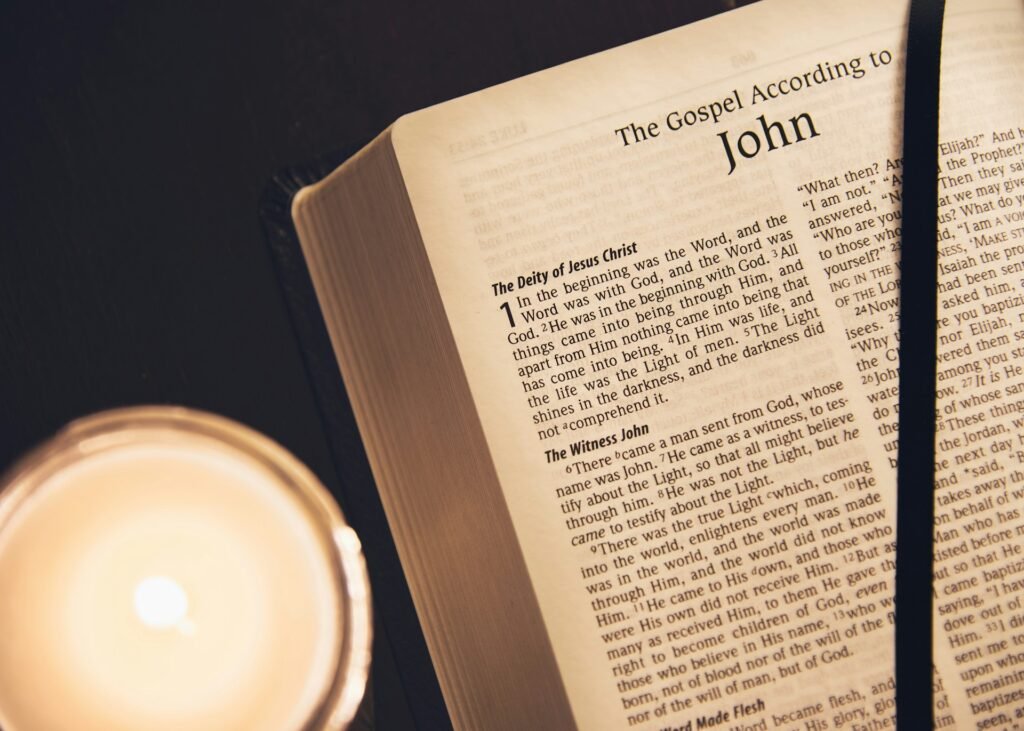
Scripturally Speaking: Christ
Do you believe that Jesus is the Christ, the Son of God? Jesus is known by many titles (e.g. Lamb of God, Son of God, Lord, Savior, and Teacher); but when Jesus asked his disciples who they said he was, Peter’s famous response in Matthew 16:16 is this confession: “You are the Christ, the Son of God.” We call ourselves Christians, and we say Jesus is the Christ. It is a worthwhile endeavor to better understand exactly what it means to call Jesus “the Christ.”
The Greek word Christ and its Hebrew equivalent Messiah both mean anointed. A brief survey of the Old Testament provides examples of anointing in several different circumstances. God instructed Moses to anoint Aaron during the process of consecrating him as priest (Ex. 29:7). Samuel anointed Saul as the first king of Israel (1 Sam. 10:1) and David as the second (1 Sam. 16:12-13). In each case, anointing was an indication of God’s choosing the anointed person. This choice had great significance! On account of Saul’s status as “the LORD’s anointed,” David refused to harm him, even as Saul attempted to kill him (1 Sam. 24:6).
However, when we arrive in the New Testament, we find that the concept of “the LORD’s anointed” had changed. Many people had been anointed throughout Israelite history; but by the first century, the terms Messiah and Christ were used as titles—The Anointed One—referring to just one specific person. This Christ was someone for whom the first century Jews were waiting and watching. We can see examples of this throughout the Gospel accounts. Simeon had been promised by the Holy Spirit that he would not see death “before he had seen the Lord’s Christ” (Lk. 2:26). People who heard John the Baptist’s teachings wondered if John “might be the Christ” (Lk. 3:15). Even during Jesus’ trial, as the council was trying to incriminate Jesus, the crux of their question was, “Tell us if you are the Christ, the Son of God” (Matt. 26:63). Sometime between the anointing of priests and kings in the Old Testament and these first century accounts, the idea of “the Lord’s Anointed” had transformed from a general term to one which referred to a specific person.
In fact, it was God’s own promises that had shaped this understanding of Christ. As Jacob blessed his son Judah, he prophesied that “the scepter shall not depart from Judah” until Israel was ushered into a time of prosperity (Gen. 49:10-12). Some future Judean king (or kings) would be the one(s) to usher in a time of blessing for God’s people. God later made a promise to David (the first king from the tribe of Judah) that he would build a house for David, a throne that would be “established forever” (2 Sam. 7:16). Indeed, the Davidic line of kings continued in Judah until the Babylonian captivity. This established an expectation for the Israelites – one day a king of David’s line would establish a time of peace and prosperity for God’s people from a throne that would never depart. This expectation was further developed by God’s prophets. Isaiah, for example, records God’s message of hope: a child who will be called God and who will reign on the throne of David in justice and righteousness (Is. 9:2-7)! As Isaiah later speaks of God’s judgment as the cutting down of trees, he says “there shall come forth a shoot from the stump of Jesse.” This root would slay the wicked, be righteous and faithful, and establish peace that was previously unknown (Is. 11:1-9).
In this historical context, it should not surprise us that the Israelites had developed an expectation that some descendant of Judah in the line of David would reclaim David’s throne and restore Israel’s prosperity – The Anointed One. Even as the Jews were held captive in Babylon; even as the Roman empire expanded and occupied their land; Israel could still point to the coming Messiah – the new ruler who would usher in the golden age of Israel. When Gabriel told Mary she would conceive Jesus, he clearly used “Messianic language.” This child would be given the throne of David and he would reign forever over a kingdom without end. There is no question who Gabriel was talking about!
However, we see from their reactions to Jesus and his ministry that people didn’t understand how he could be the long-awaited Christ. Where was the mighty king of Judah? Where was the restoration of Israel? Where was the time of prosperity and peace? Jesus did not march to Jerusalem to claim his throne or lead a rebellion against the Roman government. He did not restore temple worship or make Israel a powerhouse nation. Many saw this and decided there was no way he could be the Christ!
The reality of Jesus’ fulfillment as “the Lord’s Anointed” was unexpected but far better! Before claiming his throne, the King became a sacrificial Lamb. Instead of claiming the crown of men, he claimed the crown of thorns. Instead of overcoming the oppression of Rome, he overcame the oppression of sin and death. Instead of restoring Israel to the former “glory” of Sinai or David he restored Israel to the greater glory of a new covenant where true peace – a restored relationship with God – was available for people of all nations.
When Jesus faced death, it did not weaken his claim to the throne. Instead, his claim was made unshakeable through his death, burial, and resurrection. So Jesus reigns! As the Lord’s Anointed, the Messiah, the Christ – Jesus reigns as King over God’s never-ending kingdom. When we call Jesus the Christ, we confess the authority with which he rules as King;and we proclaim the hope we have because he restores our relationship with God.
Do you believe that Jesus is the Christ, the Son of God?
Are You Better Off Today?
Politics As Usual
Sex and Sanctification
Where Do We Go From Here?
Life presents each of us with all kinds of challenges and choices. The metaphor of walking is used both in and out of Scripture to typify our lives and the events and things with which we will inevitably intersect during our earthly sojourn.
As the philosopher of Ecclesiastes observed, “To everything there is a season, a time for every purpose under heaven: a time to be born and a time to die … a time to weep, and a time to laugh … a time to keep, and a time to throw away … a time of war, and a time of peace” (Eccl. 3:1-8). While we might see this simply as a poetic way of acknowledging and coping with the ups and downs of life, we must not draw the cynical conclusion that serves as bookends to the words of this philosopher, “Vanity of vanities, all is vanity” (1:2; 12:8).
While life might appear to be meaningless from our limited perspective “under the sun,” it is not! However, what gives life meaning—regardless of whether we are experiencing mountain-top highs, dark-valley lows, or something in-between—is not ourselves but God. “Fear God and keep His commandments” (12:13) is the conclusion that offers stability in an otherwise chaotic, inconsistent, and often unfair world.
So, as we trudge through valleys or across plateaus and come to intersections in our lives that require us to make choices, do not become discouraged or paralyzed by the question of “Where do we go from here?” Many paths we might take are not objectively right versus wrong. Sometimes there are decisions to be made and several choices can be used to pursue righteousness, edify one another, or bring glory to God. We need not agonize as if there is only one right choice in matters of liberty.
However, this is not to say that all choices are equal. When many disciples of Jesus were challenged and offended by His teaching, they “walked with Him no more” (Jn. 6:60-66). “Then Jesus said to the twelve, ‘Do you also want to go away?’ Then Simon Peter answered Him, ‘Lord, to whom shall we go? You have the words of eternal life. Also we have come to believe and know that You are the Christ, the Son of the living God’” (vv 67-69)
Whatever choices we do make, we need to make sure our choices will keep us following Jesus as the way, the truth, and the life (14:6). Indeed, choosing a path that enables us to keep looking unto Jesus (Heb. 12:2) may require us to change our course. Too often, we get stuck on a path (which may have served its purpose for a time) on which we remain out of habit, convenience, sentimentality, or ignorance rather than out of sincere devotion to God. My grandfather began Think in 1969 with the desire to publish a free paper. Following the first issue, he began receiving money from people (without any solicitation) who wanted to help defray his costs, and this has continued with every issue since. These “Voluntary Partners” (as they came to be called) have enabled Think to continue in print for over 55 years. However, as the new editor of this family paper, I have to give thought to the relevance and practicality of continuing to print this paper in a digitized, online world. As readers of Think, you can help me with this evaluation by sharing with me your thoughts by emailing me at the address below. Your input (or lack thereof) will help me to decide where we go from here.