
From the Archive:

Learning from the Temptations of Christ
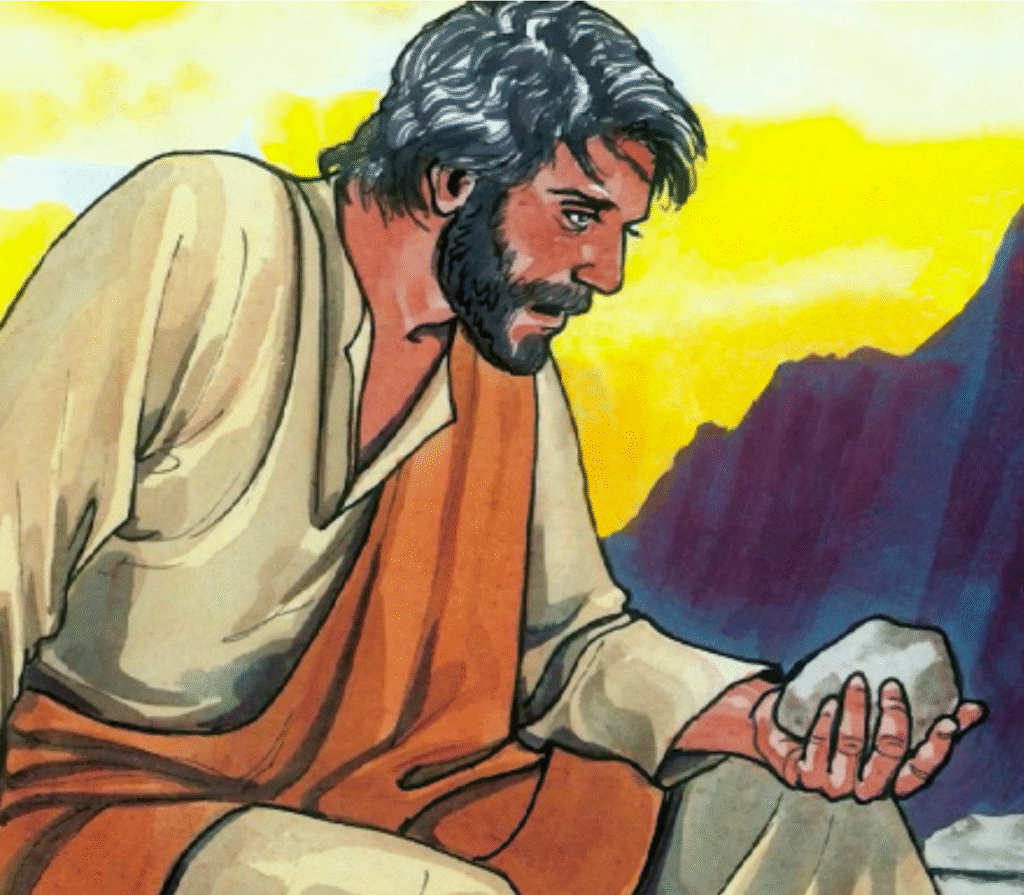
Three of the four gospel accounts refer to Jesus being led by the Spirit into the wilderness to be tempted by the devil. Mark’s gospel gives a very brief summary of this event, making it clear that this took place immediately after Jesus’ baptism when the voice from heaven declared, “You are My beloved Son, in whom I am well pleased” (Mk. 1:11-12). Mark makes no mention of Jesus’ forty-day fast or any of the specific temptations—only that He “was tempted by Satan, and was with the wild beasts; and the angels ministered to Him” (vs.13). The accounts by Matthew (4:1-11) and Luke (4:1-13) reveal three of Satan’s enticements near the end of this ordeal, as well as Jesus’ responses to His adversary.
We should not think that the three specific temptations recorded constituted the totality of Satan’s attacks during those forty days, nor should we think that Jesus was free from temptations after this. Satan merely left Him “until an opportune time” (Lk. 4:15). From the book of Hebrews we learn that, as a man, He “was in all points tempted as we are, yet without sin” (Heb. 4:15).
Though the apostle John did not include this event in his account of the life of Jesus, many sermons have been preached noting that the three temptations in the wilderness seem to correspond well with John’s descriptions of “all that is of the world.” He identifies three worldly desires we all face: “The lust of the flesh, the lust of the eyes, and the pride of life” (1 Jn. 1:15-17). The thought is that every sin begins as a temptation to yield to one or more of these three human desires in a way not authorized by God.
It’s understandable, that at the end of a forty-day fast, using one’s ability to turn stones into bread would be tempting. Under other circumstances this might not have been sinful, but performing this miracle was not how Jesus was to prove that He was the Son of God. In response, Jesus quoted Moses who reminded Israel how God had humbled them by allowing them to hunger in order to teach them that “man shall not live by bread alone; but man lives by every word that proceeds from the mouth of God” (Deut. 8:3).
One thing we can learn from this temptation is that Satan is devious enough to use a natural human desire to tempt us to do evil. He will try to convince us that because the desire is legitimate, we have a right to satisfy it anyway we can. We learn from Jesus’ response that we should listen to the word of God instead of being directed solely by our fleshly desires. In the event of hunger, God’s word teaches us to work in order to satisfy this lust (Eph. 4:28).
Hunger is not the only natural fleshly desire that Satan will tempt us to satisfy illegitimately. Sexual desire is one of his most powerful enticements, and he has convinced much of humanity that they have “a right” to satisfy it as they please. God’s word teaches us that “Marriage is honorable among all, and the bed undefiled; but fornicators and adulterers God will judge” (Heb. 13:4).
Luke’s account then has Satan taking Jesus upon a high mountain to see “all the kingdoms of the world in a moment of time” (4:5). Matthew described this mountain as “exceedingly high” (4:8). There Satan offers Jesus what Satan thought would be irresistible: “If You will worship before me, all will be Yours” (Lk. 4:7). It had to be a glorious sight; but, resisting the lust of the eyes, Jesus preached God’s word to Satan: “It is written, ‘You shall worship the Lord your God, and Him only you shall serve’” (Deut. 6:13; 10:13).
Satan isn’t likely to use the lust of our eyes to promise world domination, but he will put before our eyes whatever appeals to us if only we will bow to him. We would do well to remember that when Achan “saw a beautiful Babylonian garment, two hundred shekels of silver, and a wedge of gold,” he was led to coveting and taking what was accursed (Josh. 7:21).
Following the order of temptations given in Luke’s account, Satan’s final effort to trip Jesus up involved taking Him to a high place of the temple and challenging Him, “If You are the Son of God, throw Yourself down from here” (4:9). Satan even resorted to quoting Scripture promising God’s protection (Psa. 91:11-12). But Jesus recognized that Satan was trying to entice Him to test whether God would acknowledge His Son by saving Him from such a fall. Jesus’ response: “It has been said, ‘You shall not tempt the Lord your God’” (Deut. 6:16).
We need to be aware that Satan has “his ministers” who portray themselves “as ministers of righteousness” (2 Cor. 11:15) who will even quote from the Bible in order to teach what the Scriptures do not teach. They may be in pulpits or theological seminaries, twisting not only the apostle Paul’s epistles, “in which are some things hard to understand,” but also “the rest of the Scriptures” (2 Pet 3:16). Perhaps the most significant thing we should understand from Satan’s attempt to entice Jesus to sin is that the Son of God was not Satan’s ultimate target. Had he succeeded, Satan would have accomplished his main mission—the inescapable bondage to sin of all mankind, resulting in our “everlasting destruction from the presence of the Lord” (2 Thess.1:9)
aldiestel@gmail.com
The Relationship Between Grace, Faith & Works
Salvation is one of the most fundamental topics that Christians can discuss. Understanding what the scriptures say about salvation will affect how we approach other parts of scripture and ultimately will determine whether or not we inherit eternal life with God in Heaven. As we look into the Bible to examine this topic, we need to be careful that we take an “all of scripture” approach lest we be guilty of either over-emphasizing or under-emphasizing an aspect of salvation and teach what is false. What, then, do the scriptures teach about salvation?
To begin with, the scriptures teach that we are saved by grace (Eph. 2:8-9). Grace in this passage is the unmerited favor of God. We often associate grace solely with the forgiveness of sins, but God's grace encompasses much more than this. God’s grace includes His desire to save mankind by sending Jesus to die for us in the first place. God's grace doesn't end with our conversion to Christ. We are to continually seek God's grace when we sin (1 Jn. 1:9), and grow in God's grace as we grow in Christ (2 Pet. 3:18). If God's grace simply means the forgiveness of sins, then Peter's teaching would be to sin more so we could receive more grace. This would contradict Paul's teaching (Rom. 6:1). Peter is actually teaching that we need to grow in the favor of God, not by earning it, but by growing in the knowledge of Jesus Christ. This knowledge will lead us closer to God and further away from the Devil. Grace is not simply favor. It is unmerited favor. God did not have to bestow His grace upon us: He chose to do so of His own free will. This is why salvation by grace is called “the gift of God … not of works lest anyone should boast” (Eph. 2:9). Nothing I do in this life enables me to tell God that I deserve grace. This does not mean that God extends His grace without placing any expectations on my part, for Paul said that we are saved by grace through faith (Eph. 2:8). One’s salvation by God’s grace must be coupled with one’s faith. Thus salvation is not only by God’s grace; one’s faith is required. However, that God is willing to declare us righteous by faith is indeed gracious (Rom. 4:5).
The Calvinist may respond by claiming that this faith is not our own but is faith that God gives us when He opens our hearts. But the scriptures teach that “faith comes by hearing, and hearing by the word of God” (Rom. 10:17). The scriptures never teach that God gives us saving faith against our will. Mankind must hear the word of God and, upon hearing, must respond with faith. If such is true in Romans, then it is also true in Ephesians. The saving faith of Ephesians 2:8 is not faith supplied to us by God but is faith that is produced in us as a response to hearing the word of God. Faith is the response God requires of any who would be saved by His grace.
What type of faith does God require? Hebrews 11 says that “faith is the substance of things hoped for, the evidence of things not seen,” and that “without faith it is impossible to please [God], for he who comes to God must believe that He is, and that He is a rewarder of those who diligently seek Him” (vss. 1,6).
Christians are ridiculed by some for believing in things we have not seen and trusting in a God who doesn't bodily appear among us. Others may see faith as irrational, not realizing that they also believe in things they have not seen and place their trust in people they have never met. Every time you fly, you place your faith in a pilot whom you do not know and may never see, to be able to safely fly an aircraft to your destination. Why do you do this? Because you trust that the pilot has been suitably trained to fly the aircraft according to the regulations set out by the government. It is when you lose your faith in this that you begin to choose not to fly.
God hasn't left us without evidence of His existence (Ps. 19:1). He dwelt among us in bodily form in the person of Jesus (Jn. 1:14). Furthermore, God made promises about blessing the world, and He fulfilled those promises through Jesus. Eyewitnesses reported what they saw concerning this—including Jesus' death, burial and resurrection—and it is their trustworthy testimony inspired by the Holy Spirit Himself in which we place our faith (Jn. 20:30-31, 1 Cor. 15:1-8, 2 Tim. 3:16-17). Our faith is not founded on sinking sand or based on pie in the sky. Our faith is grounded in evidence. This evidence allows us to believe in God and trust that when God says something, He is able to accomplish it. God has promised to raise up the faithful on the last day and grant them eternal life (1 Thess. 4:13-18). I can have faith (or trust) in God's power to do this based on who God is and what God has done in the past, including raising Jesus from the dead. However, a saving faith is much more than giving mental assent to an established set of facts. Saving faith actually requires us to obey God.
This is where works come in. Ephesians 2:9 says that grace is received apart from works. The works spoken of here are works of merit—works that cause us to boast in our own actions. In contrast, God has designed good works in which we should walk, works that complete our faith but earn us nothing (Eph. 2:10). These works are the very works that James speaks of in James 2:14-26. When reading this passage, one may come away thinking that James is comparing having faith with a lack of faith. Instead, James is comparing living faith with dead faith. The demons have dead faith because, though they believe in God, they do not obey. However, note that what they have is still identified as faith (Jas. 2:19). James calls us to have living faith by believing in God and obeying what God calls us to do. Repenting of our sins earns us nothing; but faithful people will repent because God has told us to do it. Baptism in water for the remission of sins earns us nothing, but this is what a faithful person will do because God says to do it. The same could be said of modesty, worship, godly living, etc. We do not perform works merely to show our faith; we perform works to complete our faith because we know that faith without works is dead (Jas. 2:22,26). We are still unprofitable servants, doing only what is our duty to do (Lk. 17:10). This view of faith and works does not lead us to live in constant fear of Hell if we have a proper understanding of salvation and forgiveness. When Christians sin, their sins are forgiven when they approach God in prayer confessing their sins (1 Jn. 1:9). God is faithful and just, and He will forgive us our sins and cleanse us from all unrighteousness when we so confess. Thus, I am not saved because I am so good but because God is so good. And since God is faithful to provide forgiveness when I repent, I can walk confidently by faith as long as my faith is grounded solidly upon God's word and not on man's opinions (1 Jn. 5:13).
Let's never be found overemphasizing faith and works to the neglect of God’s grace. However, let's also never deemphasize our own faith and works as being necessary to enjoy God’s grace. According to God, we are saved by grace, faith, and works—all three. Anything less will not lead us to Heaven.
jeremy.diestelkamp@gmail.com
Bored With Bread
One event that shows God’s grace in the wilderness and points to His ultimate grace in Jesus occurs in the context of some early complaining by Israel. Just one month after their exodus, the people craved the food they had eaten in Egypt and accused Moses of bringing them into the wilderness to kill them with hunger. God responded by promising to “rain bread from heaven” (Ex. 16:1-4). This was not ordinary bread. It appeared on the ground as“a small round substance, as fine as frost” (v. 14) after the morning dew lifted. It was “like white coriander seed, and the taste of it was like wafers made with honey”(v. 31). The people called it manna meaning, “What is it?” (cf. v. 15). Manna would be their staple food for the next forty years (v. 35). Yet after a year, they were again longing for the foods of Egypt while expressing discontentment with the manna (Num. 11:5,6).
The miraculous feeding of a nation of nomads was indeed a miracle of epic proportions on which later generations of Israelites looked with awe. Centuries later it was remembered fondly as a sign of God’s almighty provision and poetically called “angels’ food” (Ps. 78:24,25).
Many more centuries later Jesus miraculously fed five thousand, and many followed Him “not because [they] saw the signs, but because [they] ate of the loaves and were filled” (Jn. 6:26). When Jesus called upon them to work instead “for the food which endures to everlasting life, which the Son of Man will give you” (v. 27), the people wanted to know how to do such work. Jesus replied, “believe in Him whom He sent”(vv. 28,29). They responded by asking Him what sign He would perform so they could believe and suggested something awesome such as the bread from heaven which was given to their forefathers who wandered in the wilderness, (vv. 30,31). It was an interesting request seeing that their ancestors had tired of that bread and that God had explicitly given them that bread to humble them and teach them “that man shall not live by bread alone; but man lives by every word that proceeds from the mouth of the LORD” (Dt. 8:3). The Jews of Jesus’ day imagined that, unlike their forefathers, they would be content with whatever God sent them from heaven (Jn. 6:32-34).
When Jesus declared Himself to be “the bread of life” (v. 35), guess what? “The Jews then murmured” (v. 41). In the following discourse Jesus challenged the Jews to “eat the flesh of the Son of Man and drink His blood” (v. 53) and “From that time many of His disciples ... walked with Him no more” (v. 66). Have we learned what Israel would not, or do we find ourselves bored with Jesus and longing for the food of Egypt? May we be content with “the true bread” (v. 32).
andydiestelkamp@gmail.com
Responsibility to the Body
Often, dissimilarity between people makes it difficult to interact without it feeling awkward and forced. When we interact with other Christians, we know that we have the most important thing in common – we are a part of the same body in Christ. But that is the “gimme” answer – simply knowing this does not make our relationships automatically natural or enjoyable. Having Jesus in common doesn’t make us similar to one another! After all, how similar is your eye to your foot? Your kidneys to your brain? Our relationships with one another are not based on us being like each other; they are based on us being a part of the same body.
In 1 Corinthians 12, Paul uses this illustration to help us understand our relationships in Chris: “For just as the body is one and has many members, and all the members of the body, though many, are one body, so it is with Christ” (1 Cor. 12:12). In this context, Paul teaches several important principles. Everyone has their place in the body (v.15). God designed and arranged the body parts (v.18). We should appreciate what others bring to the body (v.21). On these principles, he builds what I believe to be his main point in this section: SAME BODY = RESPONSIBILITY. We are to care for one another and fulfill our “bodily role” in love.
God “so composed the body” that—instead of being divided—we members of the body would care for one another, suffering and rejoicing together (v.24-26). Our concern for each other should be as strong as our concern for ourselves because we are of the same body! We won’t all look or sound the same, nor will we all fill the same function. Nonetheless, we are of the same body.
Paul then points out that, because we all fulfill different roles in the body of Christ, we ought to be less concerned with what role we “get” and be more concerned with how we fulfill that role – namely that we fulfill our God-given roles in love. This is the “more excellent way” of verse 31. Do all have the same gifts? NO. Do all have the same responsibility to one another? YES. Our responsibility is to build up the body of Christ in love – with whatever skills, circumstances, and opportunities God has given us! Regardless of how skillful we are, we “gain nothing” if we do not have love (13:1-3).
This is not an optional part of following Christ. If we are in the body of Christ, no matter our personalities, skillsets, or positions in life, we have a responsibility in the process of “building up.” This is accomplished through Jesus-centered relationships as we each take however much or little God has entrusted us with and use it to care for one another in love.
nadiestel@gmail.com
Life-Cycles
The philosopher in Ecclesiastes observes, “To everything there is a season, a time for every purpose under heaven: a time to be born, and a time to die; a time to plant, and a time to pluck what is planted,” etc. (3:1,2). Likewise, the Hebrews author soberly writes that “it is appointed for men to die once, but after this the judgment” (9:27).
As we age, we become more acutely aware of the reality that we will not live in these failing bodies forever. Just as surely as babies continue to be born, more and more people we know depart this life. Birth and death bookend the life-cycle for all of us. It is the way of our present condition in this present world.
However, the reality of the end of life as we know it need not be hopeless. Indeed, of all people, we who believe that Jesus Christ is the risen Son of God and follow Him should be the most at ease with “a time to die.”
Life is a series of beginnings and endings; with many of these life-cycles comes some natural discomfort in the ending of anything and the uncertainty of what will follow. Whether we are graduating from school, moving out on our own, getting married, changing jobs, retiring, or losing a spouse, there is apprehension about what might come next and how we will cope.
This observation about life-cycles is true for churches as well. While the church that Jesus promised to build would be unfazed by “the gates of Hades” (Matt. 16:18), local groups of Christians have come and gone over the last two millennia. The one body of Christ continues to grow, and the membership of those added to it by the Lord is unaffected by their physical deaths. Yet, we see that local churches that were once vibrant can very much be affected by death and may dwindle into obscurity.
While some may think this observation depressing, it is a reality that is quite obvious to any reader of Scripture. Whatever happened to the many churches we read about in the New Testament?
Paul worked hard to spread the gospel and establish churches throughout the Roman Empire, but some may wonder to what avail he labored seeing that not one of those churches exists today. Where are the seven churches of Asia to which Jesus instructed John write? All of these early churches (including the one in Jerusalem) had varying life-cycles and eventually succumbed to the inevitable demise that comes to all people (and groups of people) in this world.
Does this reality mean that Christ’s church has failed? God forbid! While earthly churches and those who comprise them have life-cycles, the body of Christ the eternal One does not.
Therefore, let all saints remember that neither the end of their lives nor the end of their local churches is a reason for despair. While it is right that we press on with diligence in this life while we have the strength to do so, we need not conclude that the end of a cycle of life in this realm equals failure. The philosopher cryptically observed, “The end of a thing is better than its beginning” (Eccl. 7:8). In Christ, the end of a thing is the beginning of something greater (cf. Phil. 1:23).
andydiestelkamp@gmail.com

“Now may the Lord of peace Himself give you peace always in every way. The Lord be with you all.”
2 THESSALONIANS 3:16